Trends and metrics look promising
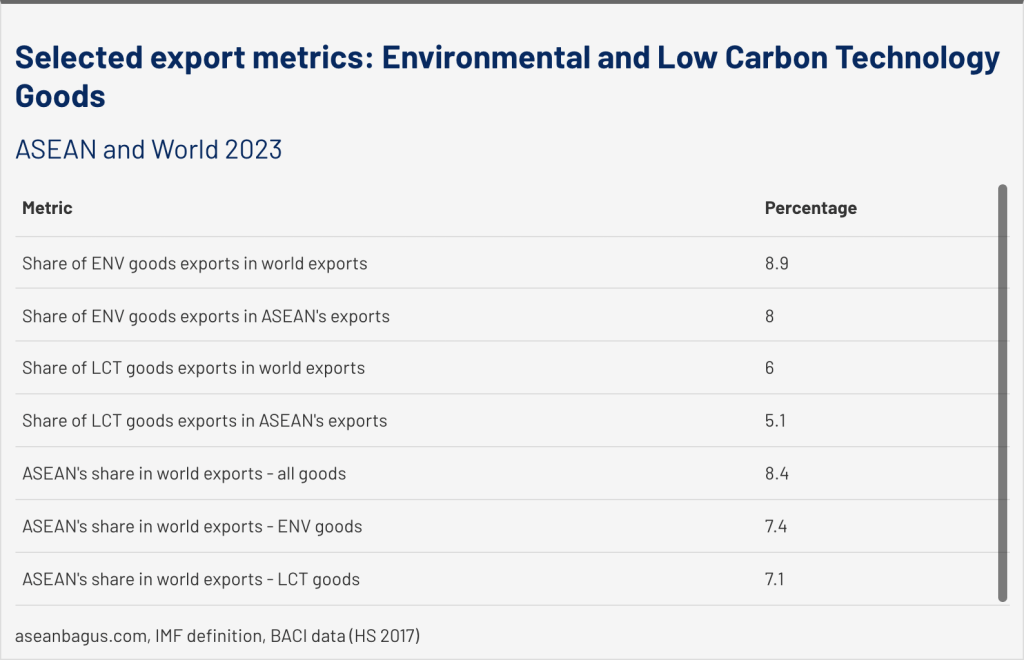
The share of environmental (ENV) and low carbon technology (LCT) goods in ASEAN’s exports is roughly one percentage point lower than the share of these goods in world exports.
ASEAN’s share in world exports of ENV and LCT goods is lower than its share of world exports in all goods, by between one and one and a half percentage points.
The share of Intra-ASEAN trade in ENV and LCT goods (in ASEAN’s total trade with the world) is higher than the share for all goods. In other words, ASEAN is more integrated in trade in ENV and LCT goods.
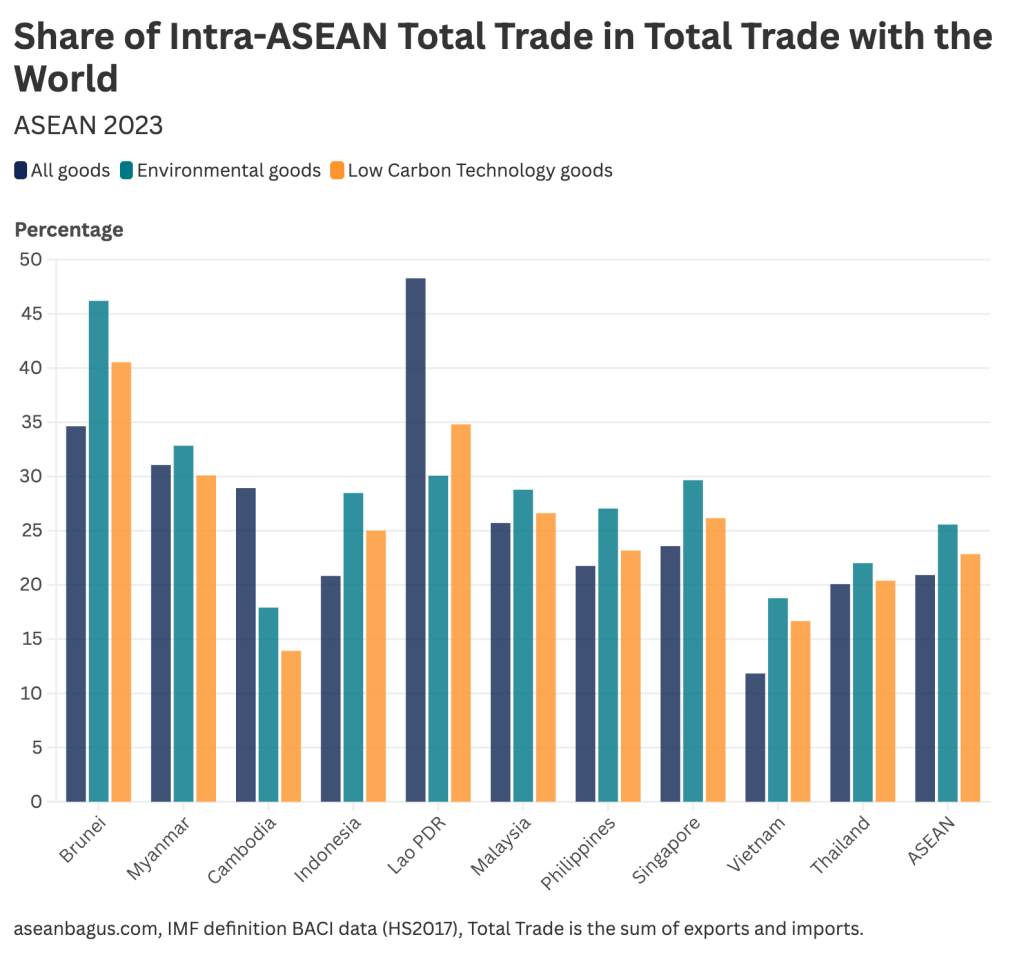
Individual country shares of course vary considerably.
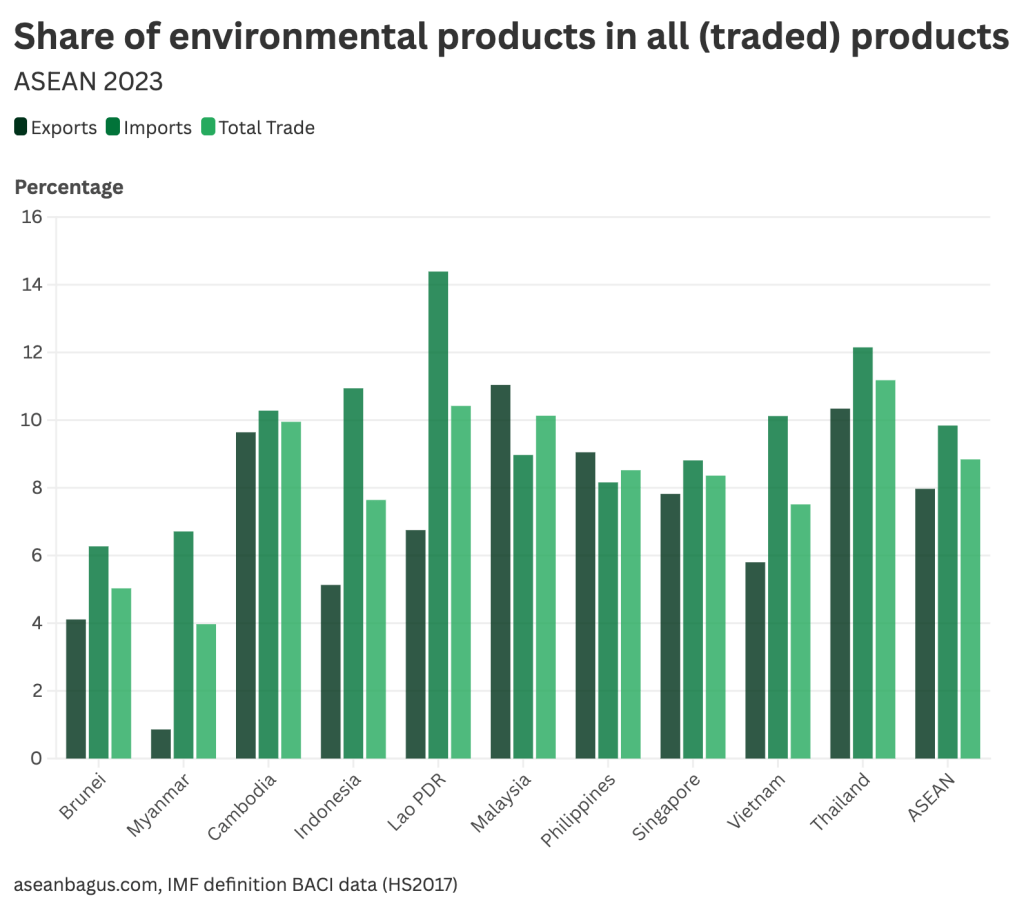
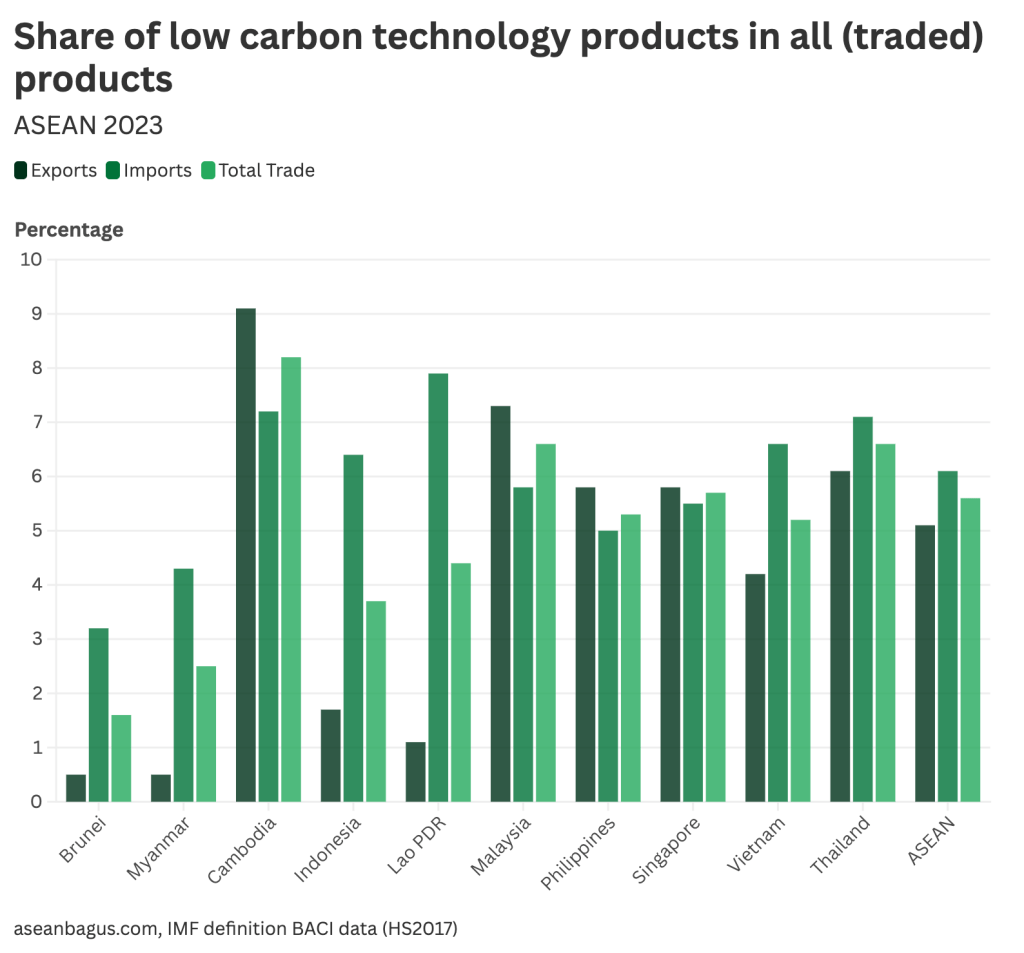
ASEAN as a whole is a net importer of both ENV and LCT goods.

In 2023, Malaysia was the only ASEAN country with a significant positive trade balance in both ENV and LCT goods. Singapore was the largest net importer of ENV goods, closely followed by Indonesia.

Indonesia was the largest net importer of LCT goods.

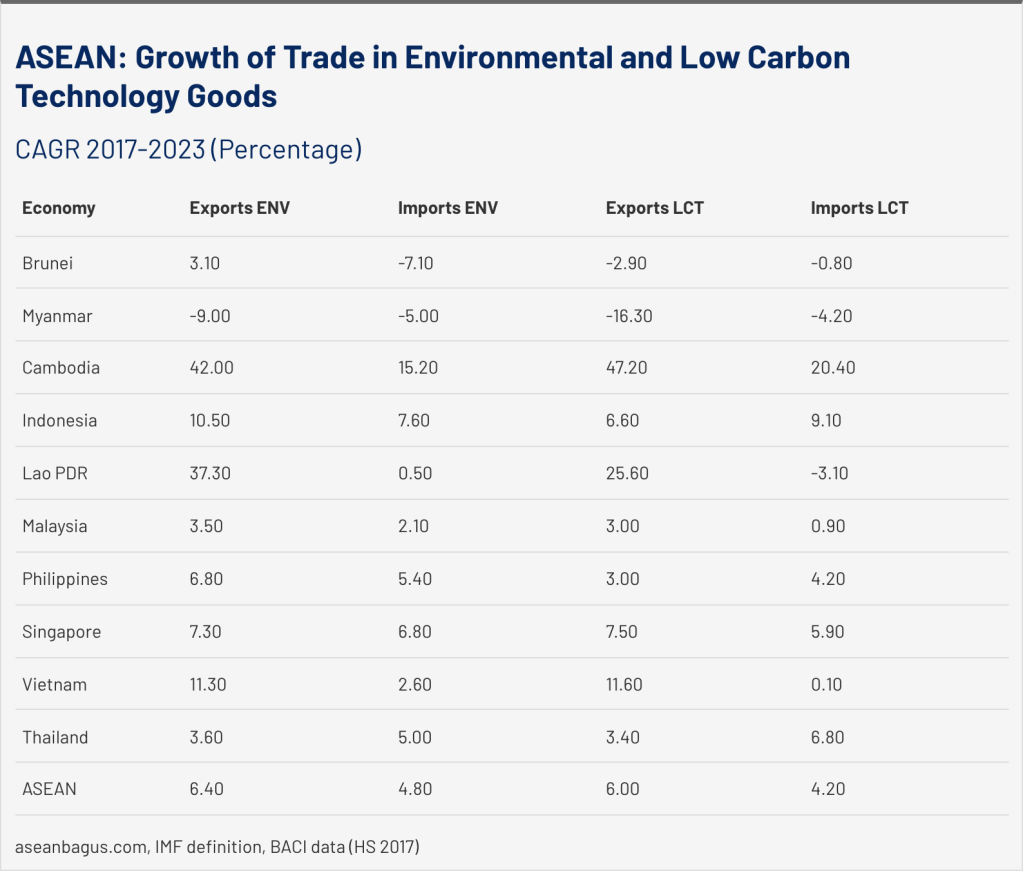
Over the period 2017-23, growth in ASEAN’s exports of both ENV and LCT goods has been higher than that in imports. If this trend continues, ASEAN’s trade balance should improve in the coming years.
With the exception of Thailand and Myanmar, this appears to be the case for individual countries as well, for ENV goods.
LCT goods show a more mixed picture. If earlier trends (2017-23) continue the trade balance of Brunei, Myanmar, Indonesia, Philippines and Thailand will deteriorate in the future.
Sources
Data: BACI balanced database (HS 2017).
Definitions of ENV and LCT goods: IMF
Tables and Charts: Flourish
 asean bagus
Leave a comment